See the best of Pantheon with a private guide
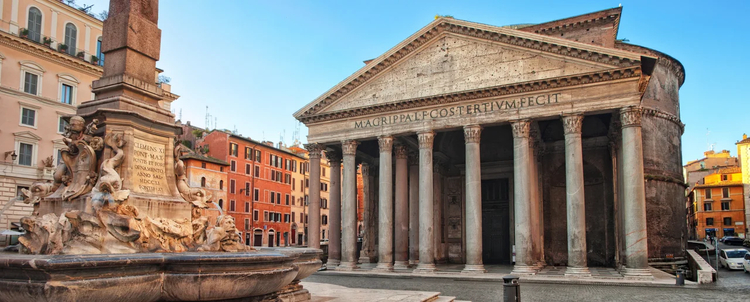
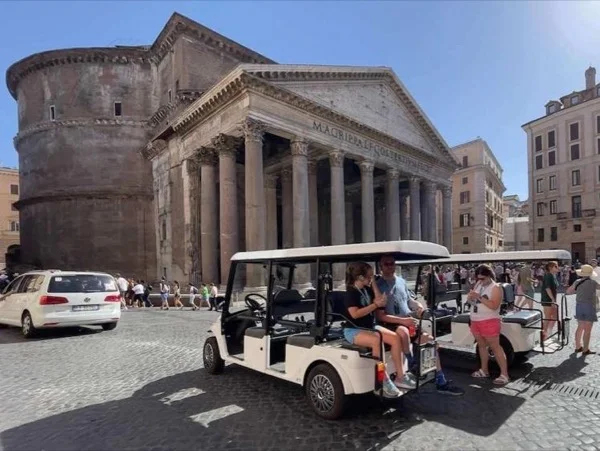
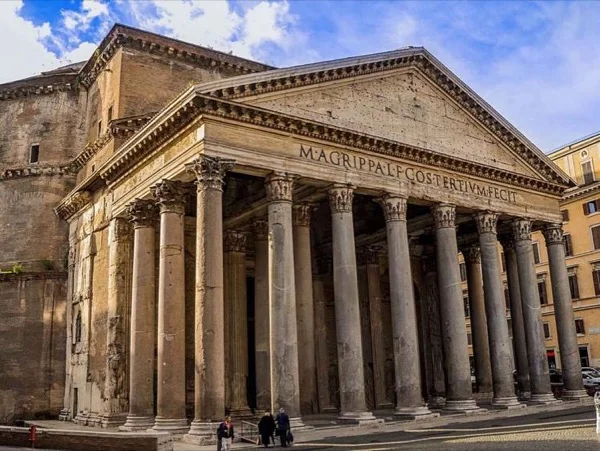
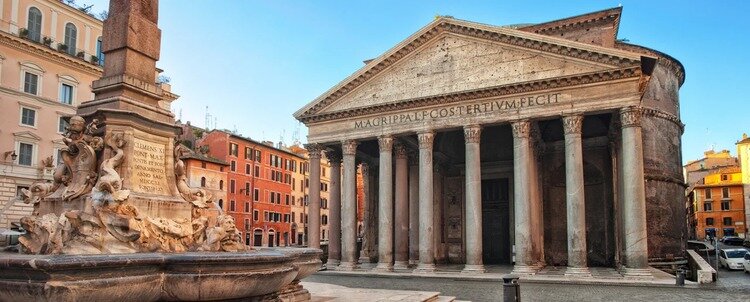
The Pantheon stands in Piazza della Rotonda in Rome’s historic centre, where an ancient Roman monument, a Catholic basilica and a memorial to modern Italy occupy the same remarkable space. It is one of the most complete buildings to survive from the Roman Empire, offering a rare opportunity to experience ancient architecture at its original scale rather than through ruins. Its restrained exterior gives little indication of the immense circular interior waiting beyond the portico.Marcus Agrippa, a statesman and military commander closely associated with Emperor Augustus, commissioned the original temple between 27 and 25 BC. Fires damaged that structure, and the building seen today was created during the reign of Emperor Hadrian, probably between AD 118 and 125. Hadrian retained Agrippa’s name in the inscription above the entrance, which translates broadly as “Marcus Agrippa, son of Lucius, made this during his third consulship.” This explains why the monument appears to credit Agrippa even though most of the surviving structure belongs to the Hadrianic period.The portico is supported by sixteen Corinthian columns of Egyptian granite, demonstrating the reach and resources of the Roman Empire. Passing through it leads into the rotunda, a circular chamber measuring approximately 43 metres in both diameter and height. These equal dimensions allow an imaginary sphere to fit inside the room, creating the balanced proportions that later influenced Renaissance architects and buildings far beyond Rome.Above the rotunda is the Pantheon’s unreinforced concrete dome. Roman builders reduced its weight by making the structure thinner towards the top and using progressively lighter materials within the concrete. Five rings of recessed coffers remove additional material while giving the ceiling its distinctive geometric rhythm. At the centre, the nine-metre-wide oculus reduces the load at the dome’s highest point and provides the interior’s only source of natural light.The oculus changes the experience of the building throughout the day. A concentrated circle of sunlight travels across the coffered dome, walls and coloured marble floor, making the architecture feel different from one hour to the next. Rain also enters through the opening, but the gently curved floor directs the water towards small drainage holes. These practical details reveal that the oculus was an integrated part of the building’s engineering rather than simply a dramatic decorative feature.In AD 609, Byzantine Emperor Phocas gave the Pantheon to Pope Boniface IV, who consecrated it as the Basilica of Santa Maria ad Martyres. This conversion from a Roman temple into an active Christian church helped protect the building when many other ancient monuments were abandoned or dismantled for materials. Its continued religious identity also explains why respectful behaviour and suitable clothing remain important during a visit.The interior contains later layers that connect the Pantheon with Renaissance art and modern Italian history. Raphael, one of the leading artists of the Italian Renaissance, was buried here in 1520. His tomb bears an epitaph celebrating the painter’s ability to imitate nature. The monument also contains the tombs of Vittorio Emanuele II, the first king of unified Italy, and his successor Umberto I. These burials transformed an ancient Roman building into a memorial connected with the creation of the modern Italian state.Several details are easy to pass without understanding their significance. Look closely at Agrippa’s inscription, the different colours and origins of the marble, the scale of the bronze entrance doors and the changing width of the dome’s coffers. The annual Christian tradition of releasing rose petals through the oculus at Pentecost adds another layer to the building’s continuing religious life. A private guide can distinguish these documented historical features from the legends and simplified stories that have accumulated around the Pantheon.Entering the rotunda can feel surprisingly dramatic. Piazza della Rotonda is often busy and noisy, while the interior is defined by its symmetry, filtered light and extraordinary sense of scale. Because the dome begins above a relatively plain cylindrical wall, it can appear to float over the room. A private guide on ToursByLocals can use storytelling and historical context to connect the portico, rotunda, dome and oculus, offer practical advice for moving through the busy piazza, and adjust the pace around your interests and comfort. Explore the Pantheon as a personal encounter with Rome’s many historical layers, or customize the experience around the stories and details that matter most to you.