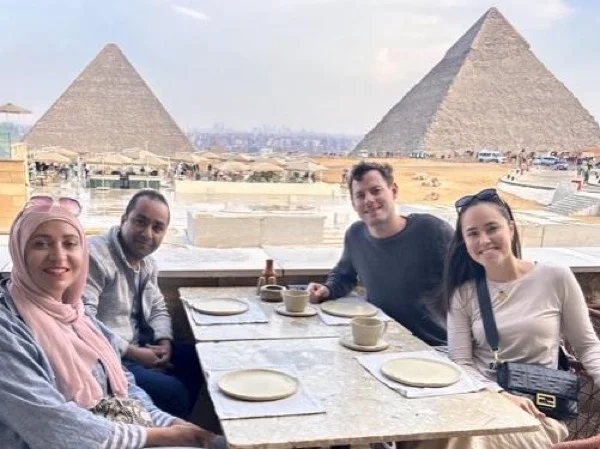
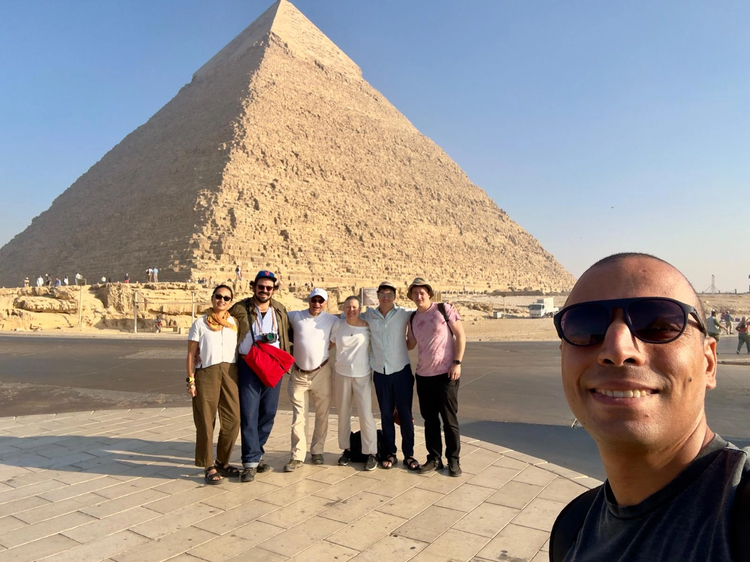
See the best of the Pyramids of Giza with a private guide
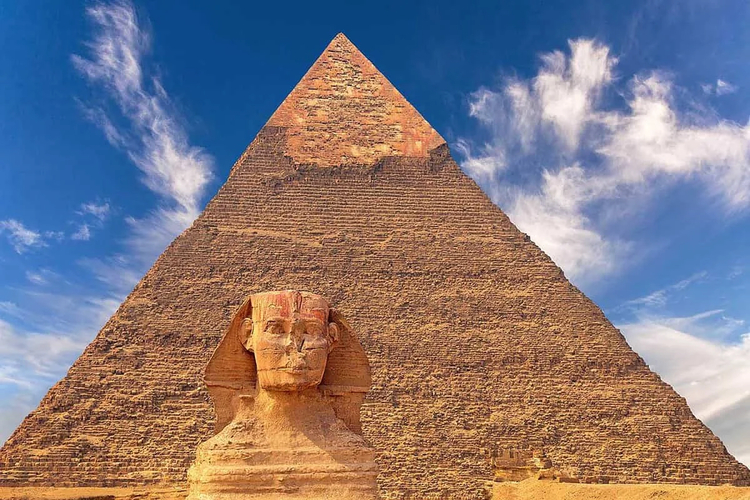
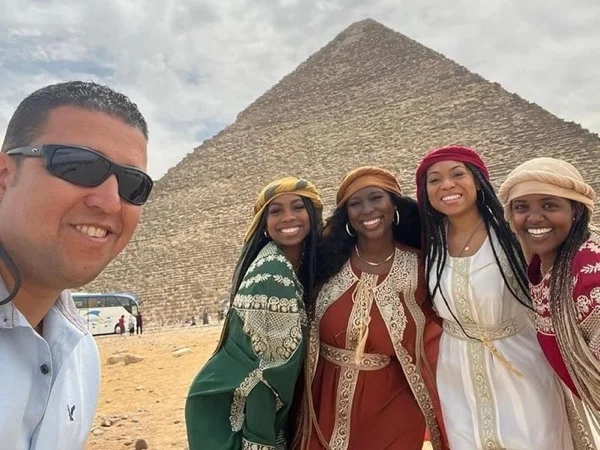
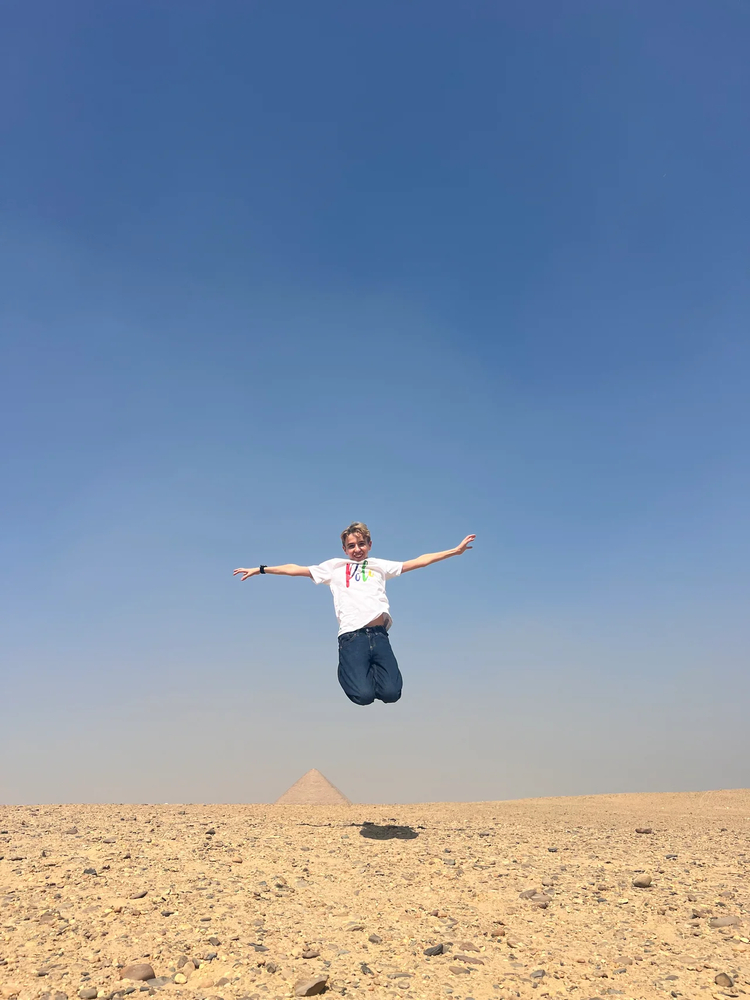
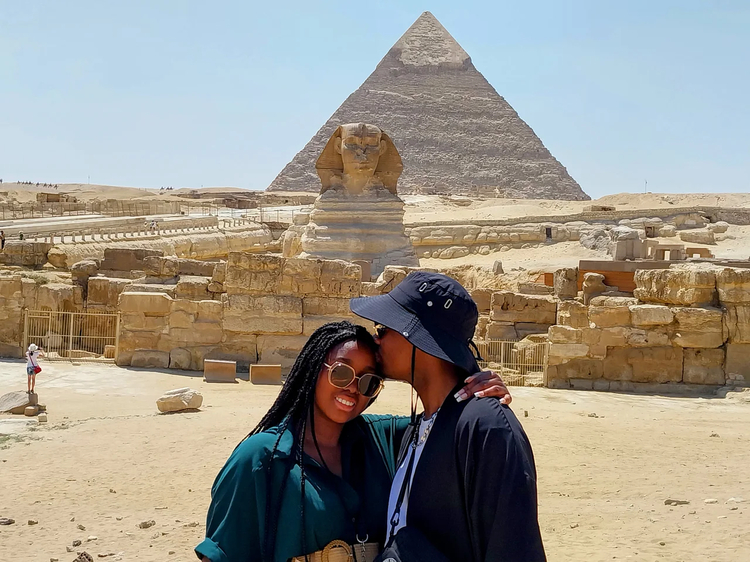
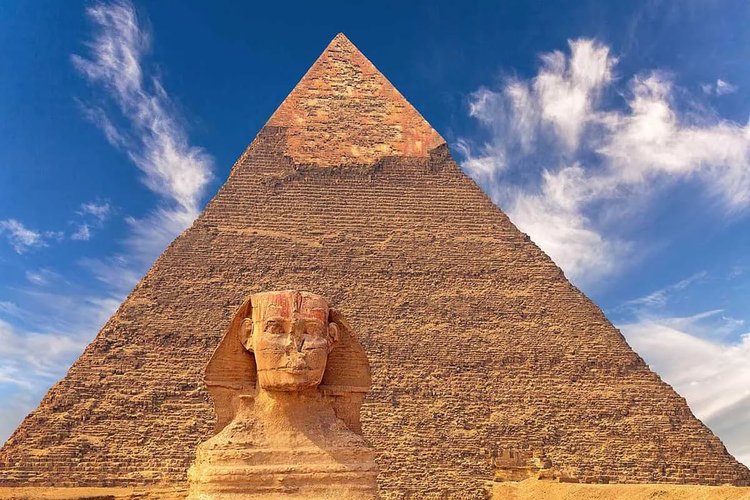
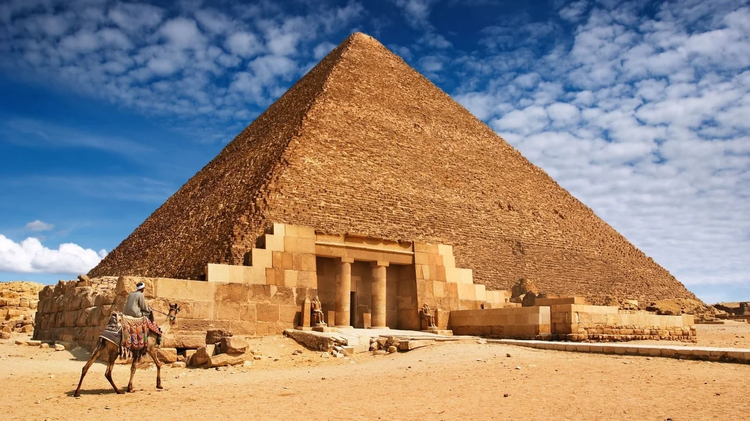
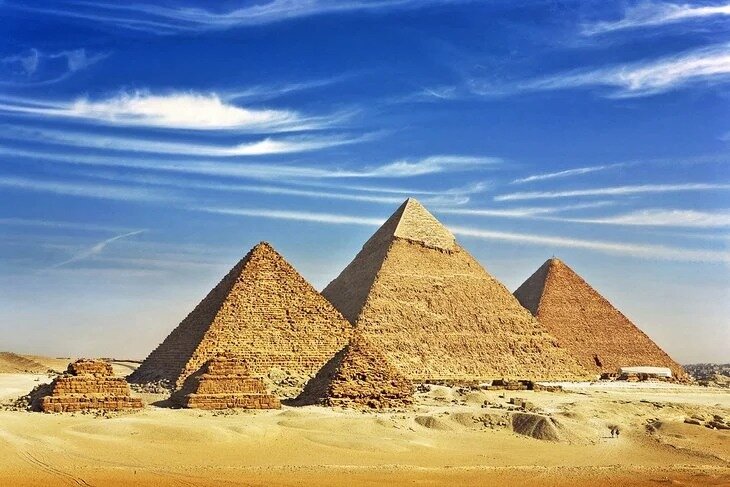
Khafre's pyramid looks taller than Khufu's from several viewpoints, even though it isn't — it simply sits on higher bedrock on the Giza Plateau, at the western edge of Greater Cairo. The three main pyramids here rose during Egypt's Fourth Dynasty of the Old Kingdom, roughly 4,500 years ago, each tied to a different ruler: Khufu, Khafre and Menkaure. None of them stood alone as a tomb. Each was the centre of a full funerary complex, built to express a pharaoh's divine kingship, promise him rebirth, and show just how much the Egyptian state could organise and command.That same precision shows up in the stone itself. Khufu's pyramid once wore a smooth outer casing of pale limestone, fitted so tightly that almost none of it survives intact today. What travellers see up close now is mostly the rougher core stone underneath. Causeways and valley temples once linked these monuments down toward buildings nearer the ancient Nile floodplain, forming a processional route rather than a scattered set of monuments. Tracing that alignment on the ground gives a sense of how deliberately the whole plateau was planned, with tomb, temple and causeway built as one connected system rather than added piece by piece.The Great Sphinx belongs to that same layout. Carved directly from the bedrock with a lion's body and a king's head, it is generally linked to Khafre's complex, standing in as a guardian for his monument. Nearby excavations have also reshaped the old image of enslaved crowds dragging stone across the desert. What archaeologists have found instead points to organised teams of labourers, craftspeople, administrators and food producers, housed and fed by a state system built to support work on this scale. That single detail changes the story from forced suffering to coordinated logistics, and it says as much about Old Kingdom government as the pyramids do about religion.Seeing the plateau in person is less about one photo stop and more about noticing how the pieces connect: subsidiary pyramids, mastaba tombs and a workers' settlement, all part of the same royal landscape. A private guide on ToursByLocals can separate confirmed archaeology from popular legend, point out the angles that make comparing the three pyramids easier, and walk through how the stone was likely quarried and moved. Since the Sphinx, valley temple and workers' settlement sit within that same funerary landscape, and Saqqara lies close enough to add an earlier chapter of pyramid building, a tour here can be shaped around your time, pace and which of these connected sites matter most to you.