
The World’s Most Remarkable Rail Journeys
Mar 27 2026
When was the last time a journey felt as meaningful as the destination itself?
Rail travel has a way of recalibrating how we experience distance. We’ve gotten so used to the abruptness of flying from one place to the next, quickly and over large stretches of land, that many of us have lost our sense of journeying. Rail travel invites you to notice how landscapes evolve and transition gradually, and to truly appreciate the distance covered from one place to the next.
But the journey doesn’t begin when you take your seat, nor does it end when you step onto the platform. The time spent on the ground—before departure and after arrival—adds context, depth, and human connection to your route.
Here are some of the world’s most compelling rail journeys you can take, paired with ideas for how to connect with each place through thoughtful, locally guided experiences before and after you travel.
Rocky Mountaineer — Canada
Vancouver → Banff / Jasper | 2 days
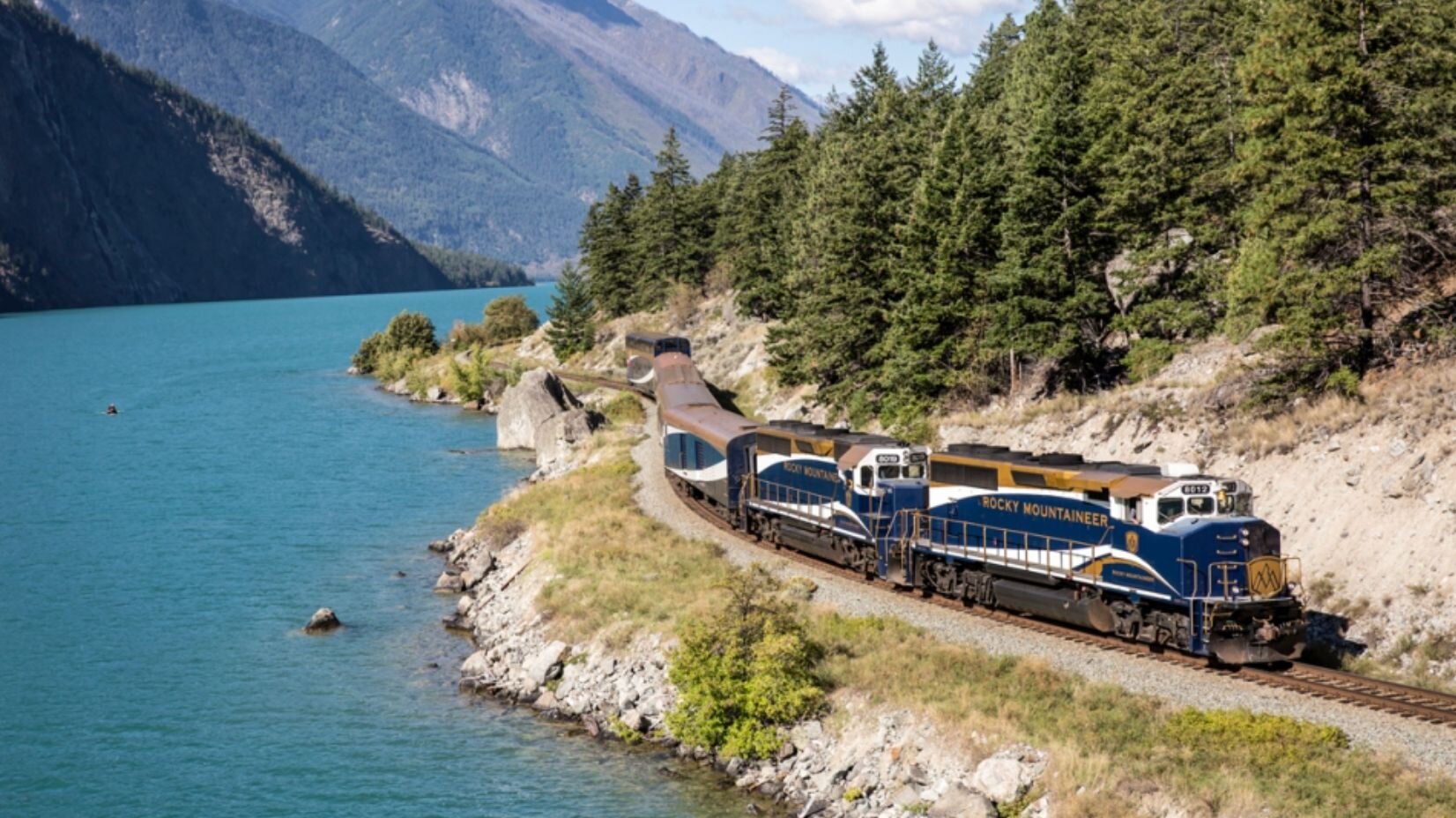
Designed for daylight travel, the Rocky Mountaineer focuses on what you can see, not just where you’re going. Leaving Vancouver, the route shifts quickly from mountainous coastal rainforest to the drier interior of British Columbia, where rolling hills and river valleys take over.
Following the Fraser and Thompson Rivers, the train moves through steep canyons and past small communities shaped by the landscape. By the second day, the Rockies begin to rise—first gradually, then with definition. Forests thicken, peaks sharpen, and the scale becomes unmistakable.
The journey reflects how Western Canada was connected—linking coast to mountains through terrain that still feels expansive and largely untouched.
Before (Vancouver):
- Walk historic Gastown and explore the city’s coastal identity with a local guide
- Visit Granville Island through the lens of food, craft, and community
After (Banff or Jasper):
- Discover the stories behind the landscapes in Jasper—Indigenous history, wildlife patterns, and geology
- Search for wildlife beyond the main viewpoints of Banff and Yoho, into quieter corners of the national parks
Glacier Express — Switzerland
Zermatt → St. Moritz | 8 hours
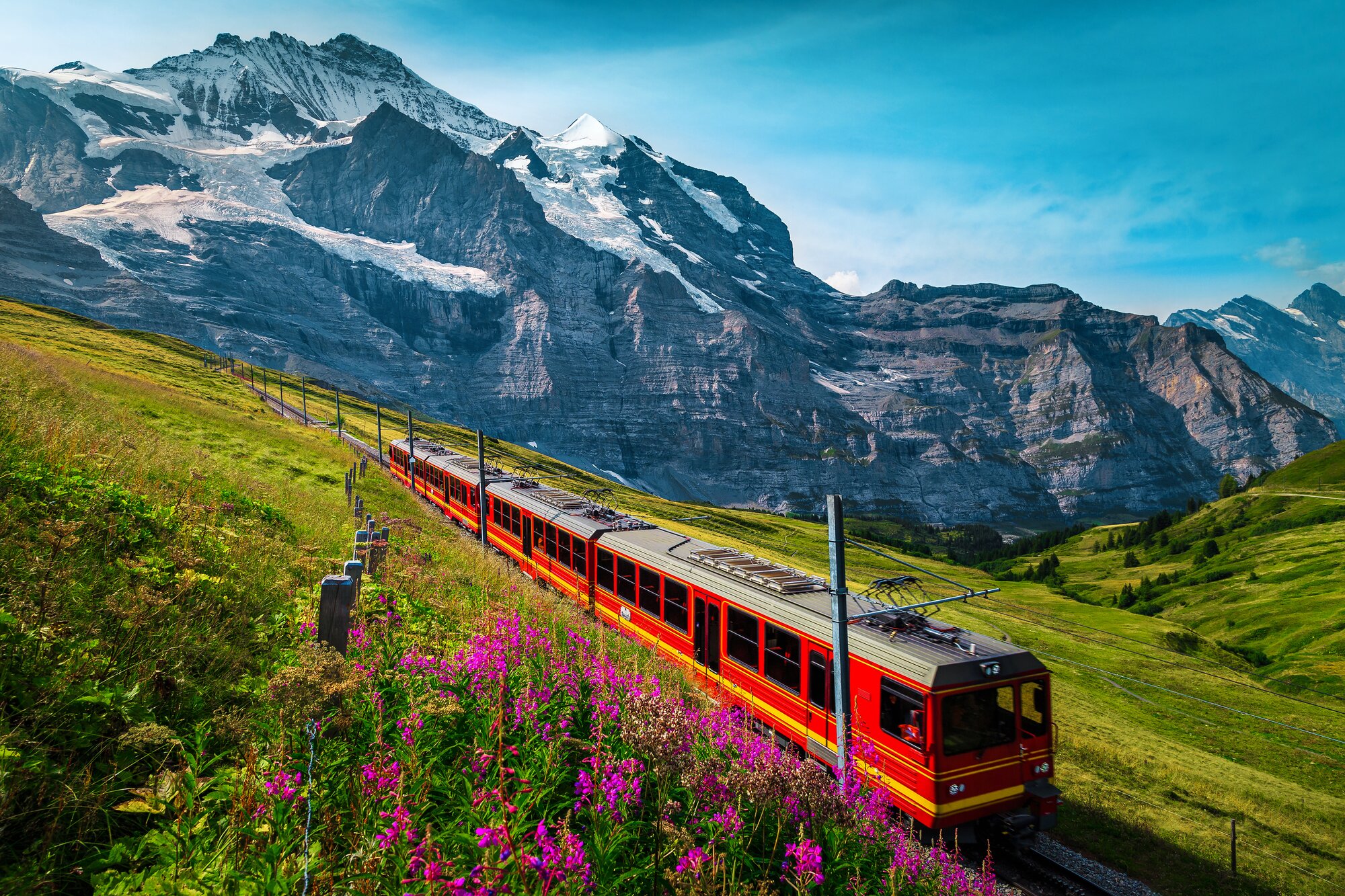
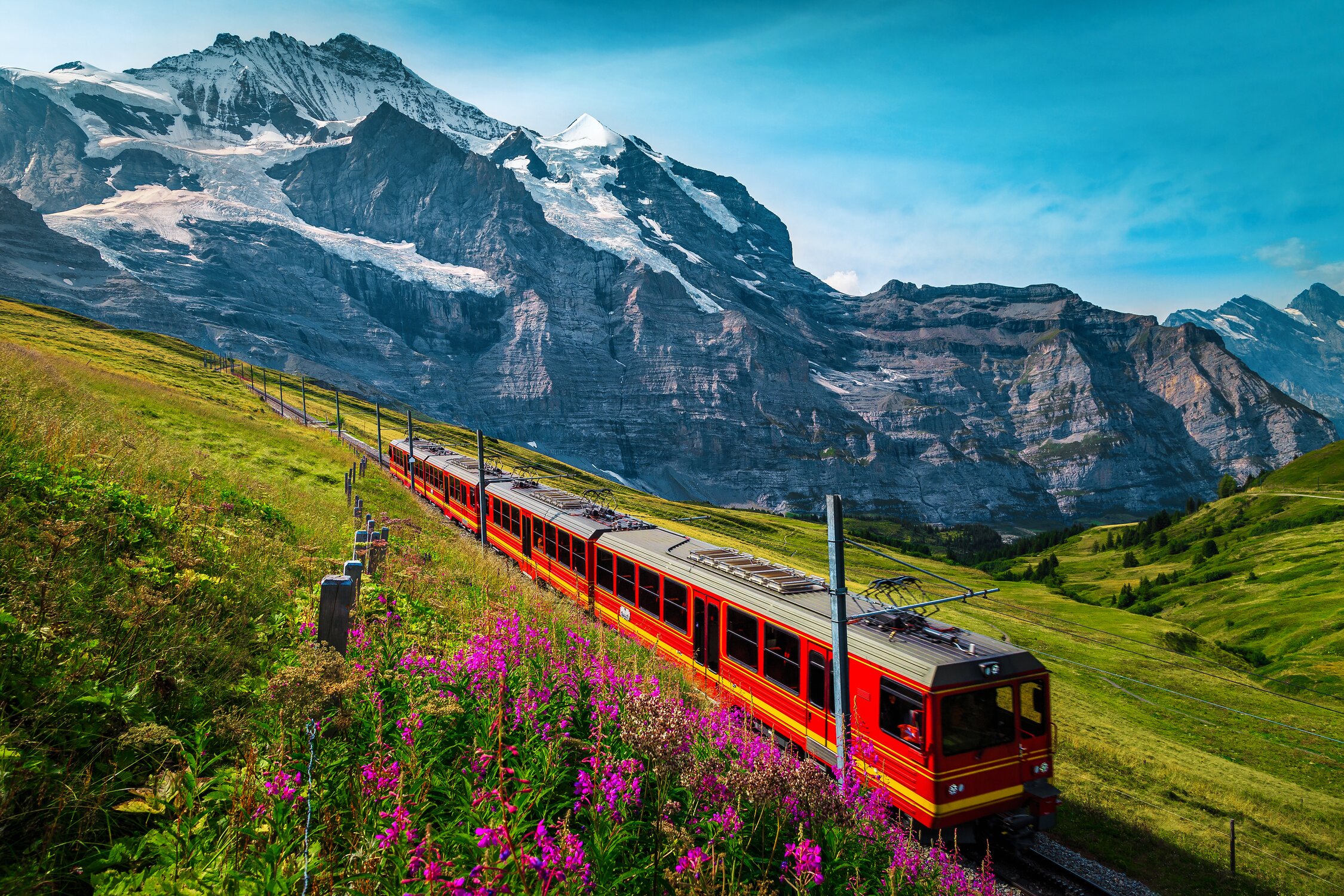
The Glacier Express covers nearly 300 km at a measured pace, allowing the details of the Swiss Alps to come sharply into focus. Departing Zermatt, the train climbs through narrow valleys and alpine villages where daily life is shaped by elevation and the season.
Wooden chalets, church towers, and terraced slopes reflect long-standing traditions, while the route itself highlights precise engineering. Spiral tunnels and high bridges create changing perspectives over rivers and gorges below. The crossing of the Landwasser Viaduct stands out as one of the most striking moments along the line.
As the train descends into the Engadin Valley, the light and architecture shift subtly, reflecting a different regional identity within Switzerland.
Before (Zermatt):
- Learn how this car-free village evolved at the foot of the Matterhorn
- Explore mountain culture, from traditional architecture to modern alpine life
After (St. Moritz):
- Step into the Engadin Valley’s distinct identity: Romansh heritage, art, and design
- Pair lake landscapes with insights into the region’s seasonal rhythms
Bergen Railway — Norway
Oslo → Bergen | 7 hours
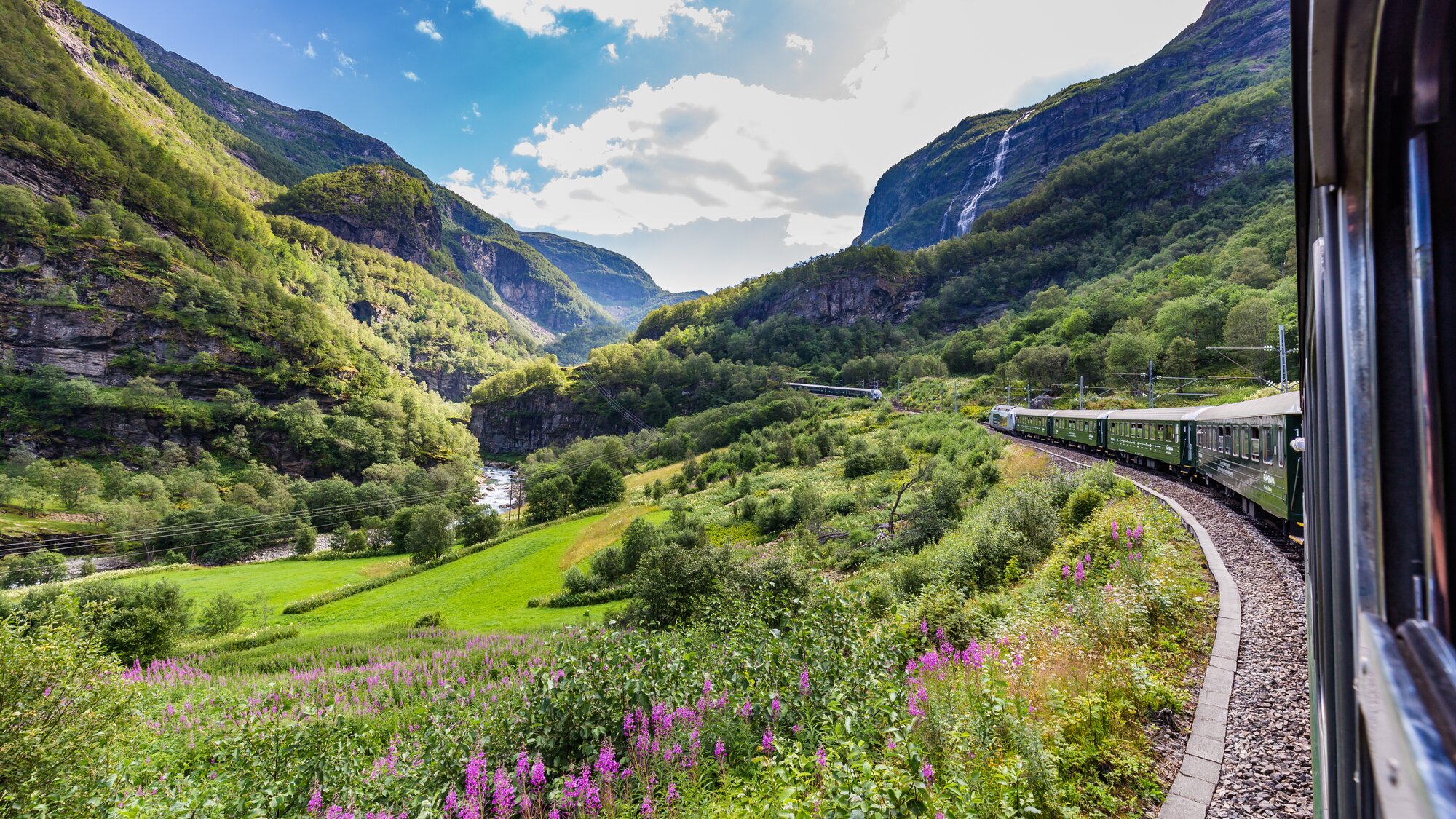
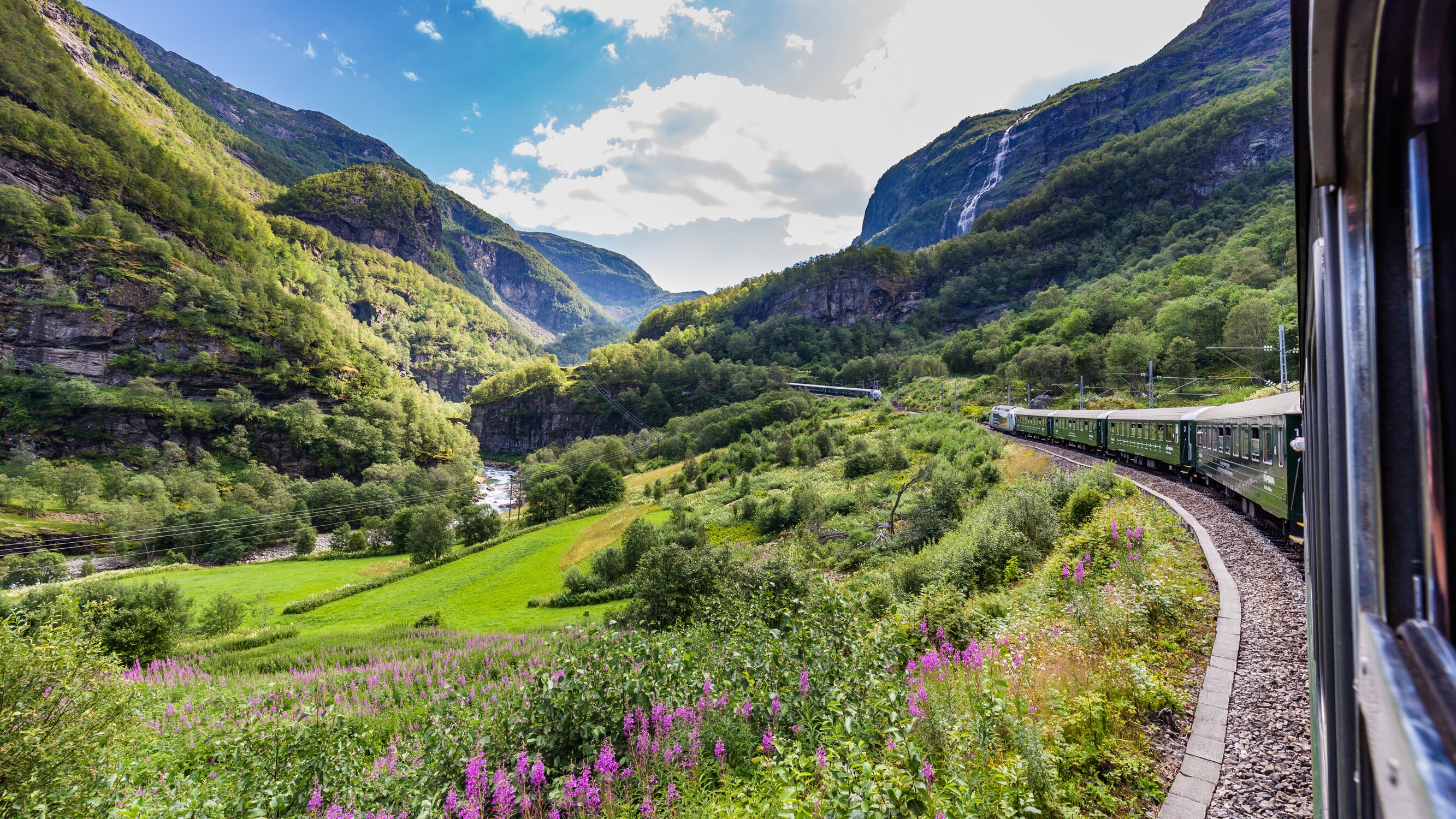
The Bergen Railway begins in urban Oslo but quickly moves into quieter, more elemental landscapes. Forests and lakes dominate the early part of the journey, gradually giving way to the open expanse of the Hardangervidda plateau.
At this elevation, the terrain becomes sparse. Trees disappear, snow often lingers, and the horizon stretches wide. The environment feels exposed, shaped by weather and season rather than development.
As the train descends toward Bergen, valleys deepen and greenery returns. Waterfalls appear along the route, and the transition toward the coast becomes more evident with each kilometre.
Before (Oslo):
- Trace Oslo’s evolution from Viking roots to contemporary design capital
- Visit neighbourhoods that reveal how Norwegians live today
After (Bergen):
- Wander the historic Bryggen district with context on Hanseatic trade
- Venture into nearby fjords with a guide who brings the landscape’s stories to life
West Highland Line — Scotland
Glasgow → Mallaig | 5 hours
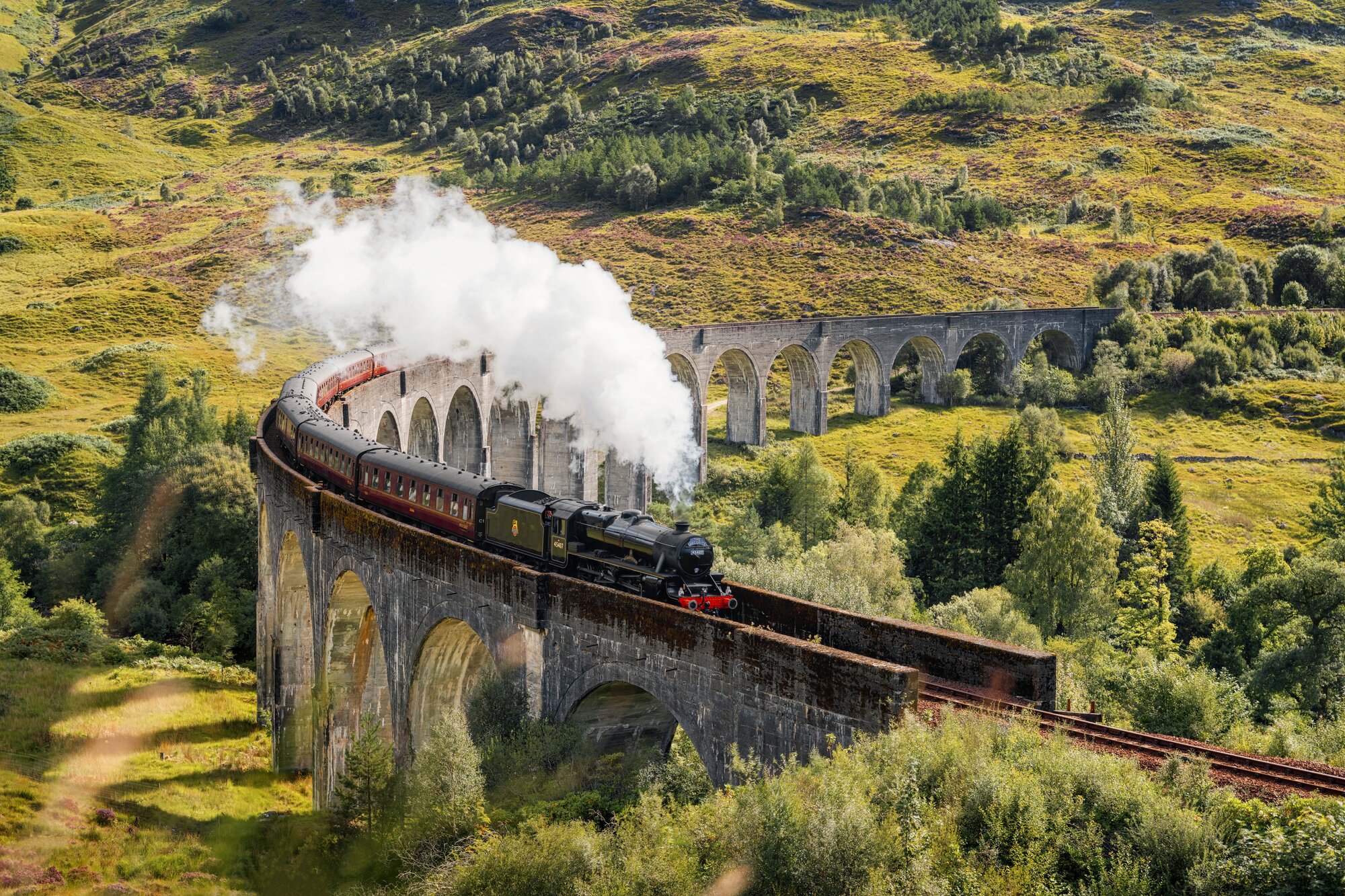
Leaving Glasgow behind, the West Highland Line moves steadily into more remote terrain. Loch Lomond marks the transition, followed by increasingly rugged landscapes of moorland and open hills.
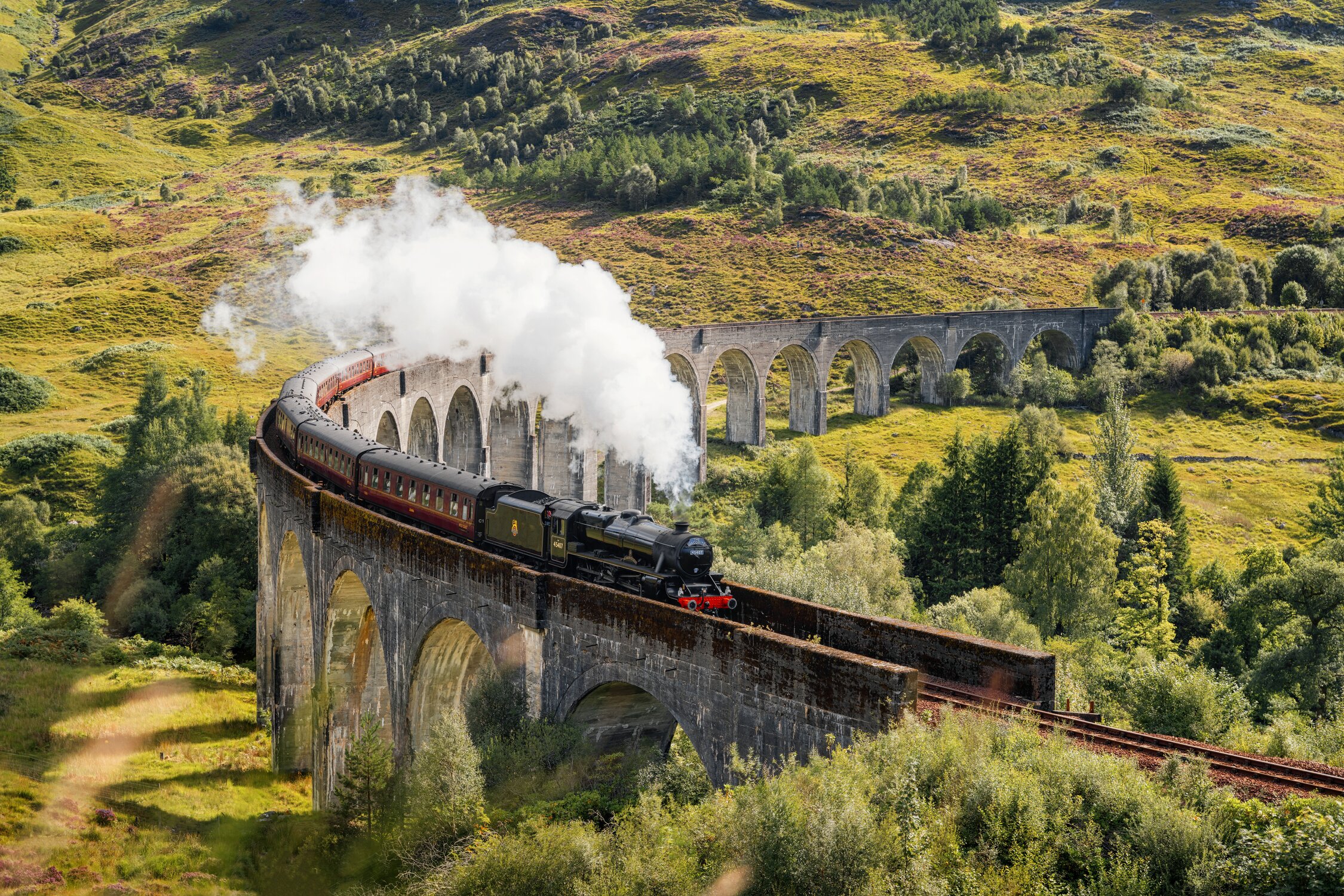
The route through Rannoch Moor is particularly memorable. With few signs of settlement, the train crosses a wide, undeveloped stretch where the landscape feels uninterrupted. Light and weather shape the colours and mood throughout the journey.
Crossing the Glenfinnan Viaduct introduces a familiar view, but the route continues toward the coast, where the scenery softens and the sea comes into view near Mallaig.
Before (Glasgow):
- Explore the city’s industrial past and creative present
- Discover historic architecture and music scenes that shaped modern Scotland
After (Mallaig / Highlands):
- Visit small communities where history and daily life intersect
- Learn about Highland culture, from clan heritage to contemporary traditions
California Zephyr — United States
Chicago → San Francisco | ~52 hours
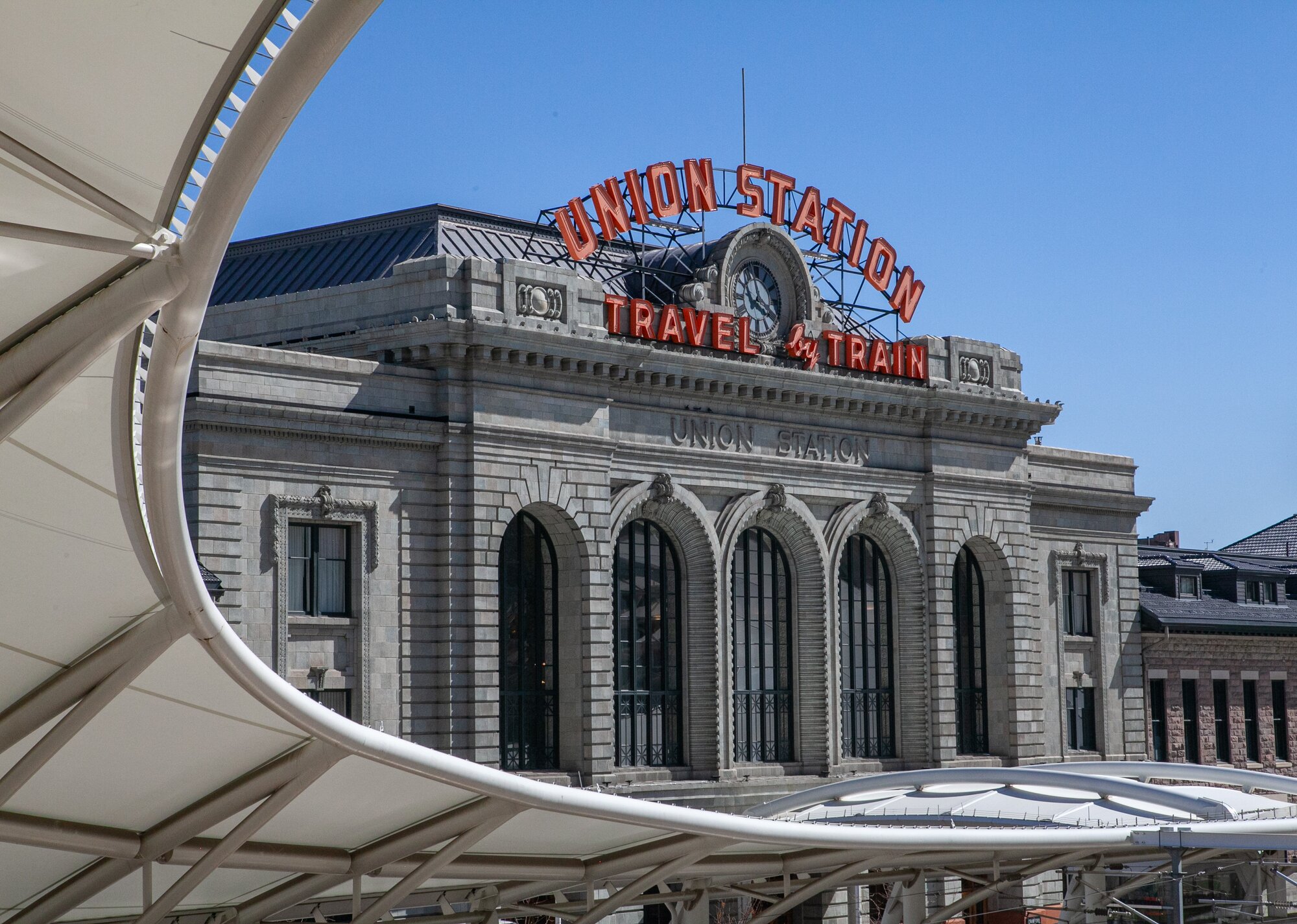
Experienced travellers say the California Zephyr is one of the most beautiful train trips in all of North America. The California Zephyr unfolds in stages, beginning with the flat, agricultural landscapes of the Midwest, before climbing into the heart of the Rockiers, and onto the Sierra Nevada. The horizon feels consistent at first as the train runs through the plains, with gradual changes as the train moves west.
The journey becomes more dynamic as the Rockies come into view. Following the Colorado River, the train passes through canyons and along steep rock faces, offering close-up views of the terrain. This section is often considered the most visually engaging part of the route.
Crossing into the Sierra Nevada, forests return and elevations rise again before the descent toward California’s Central Valley and the Bay Area.
Before (Chicago):
- Understand the city through its art, architecture and neighbourhoods
- Explore the cultural layers behind its food and music
After (San Francisco):
- Go beyond the iconic sights into the city’s diverse communities
- Explore the Bay Area’s evolving identity and iconic vistas
Belmond Andean Explorer — Peru
Cusco → Arequipa (via Lake Titicaca) | 1–2 nights
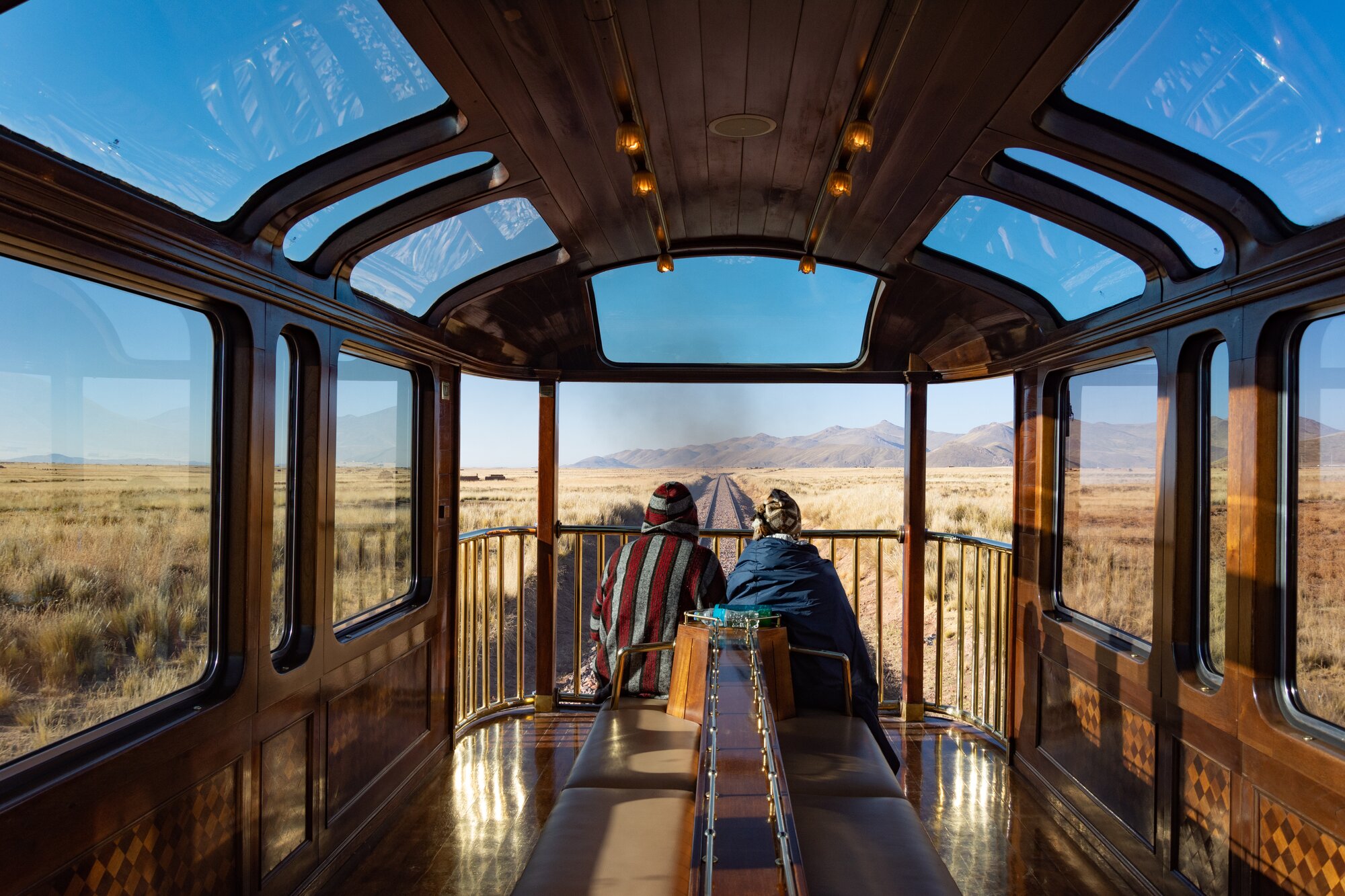
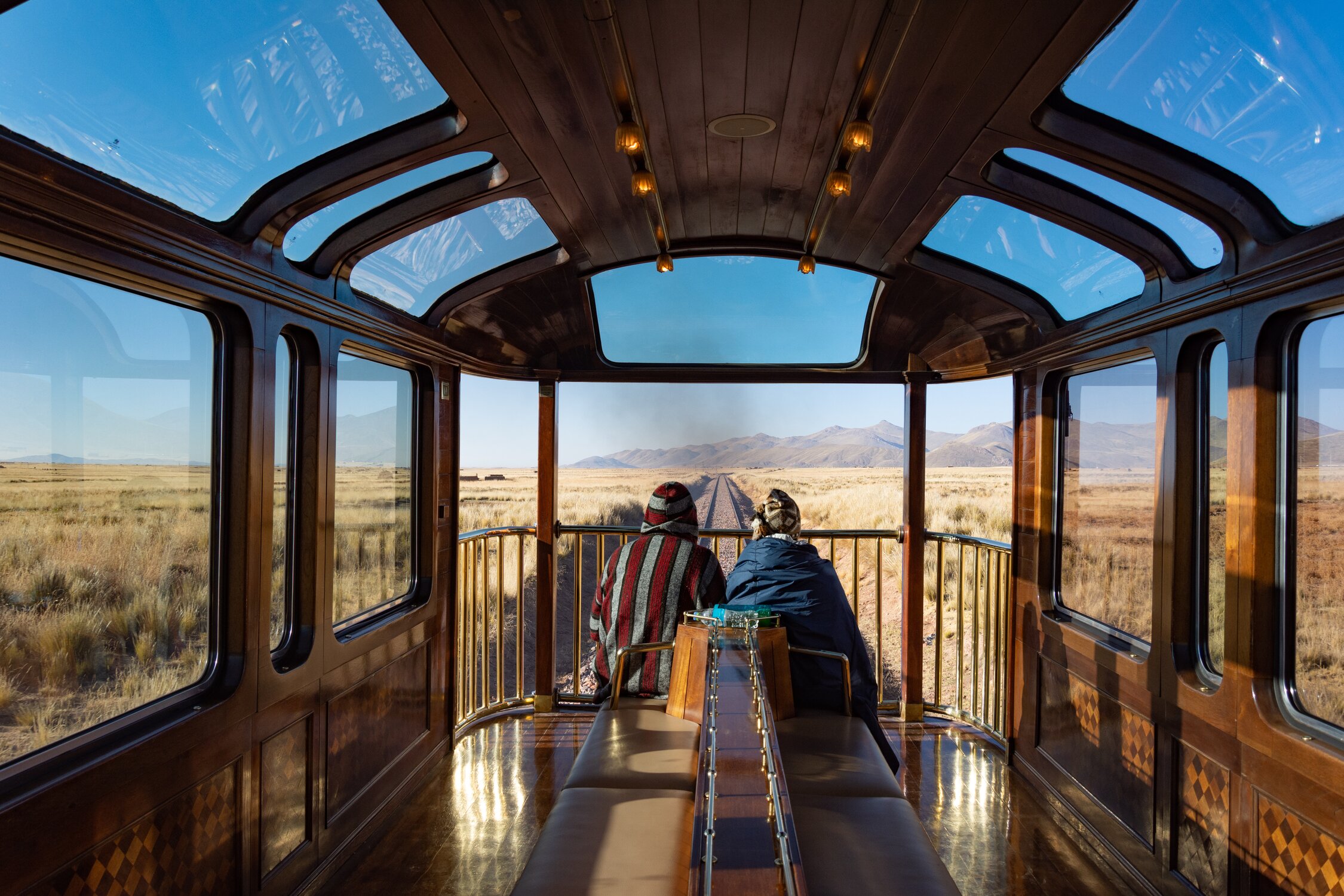
The Andean Explorer travels through high-altitude landscapes where distance and light feel more pronounced. Departing Cusco, the train passes terraced hillsides, small villages, and grazing land dotted with llamas and alpacas that reflects long-standing agricultural traditions.
Approaching Lake Titicaca, the landscape opens up. The lake’s scale dominates the horizon, with wide views that emphasize the altitude and setting.
Continuing toward Arequipa, volcanic peaks come into view and the terrain shifts to drier, earth-toned landscapes. The route highlights how geography and culture are closely connected across the Andes.
Before (Cusco):
- Walk through layers of Inca and colonial history with a knowledgeable guide
- Visit nearby communities to understand living traditions
After (Arequipa):
- Discover the city’s distinctive architecture and culinary heritage
- Explore the surrounding volcanic landscapes and the Colca Canyon with local insight
TranzAlpine — New Zealand
Christchurch → Greymouth | 5 hours
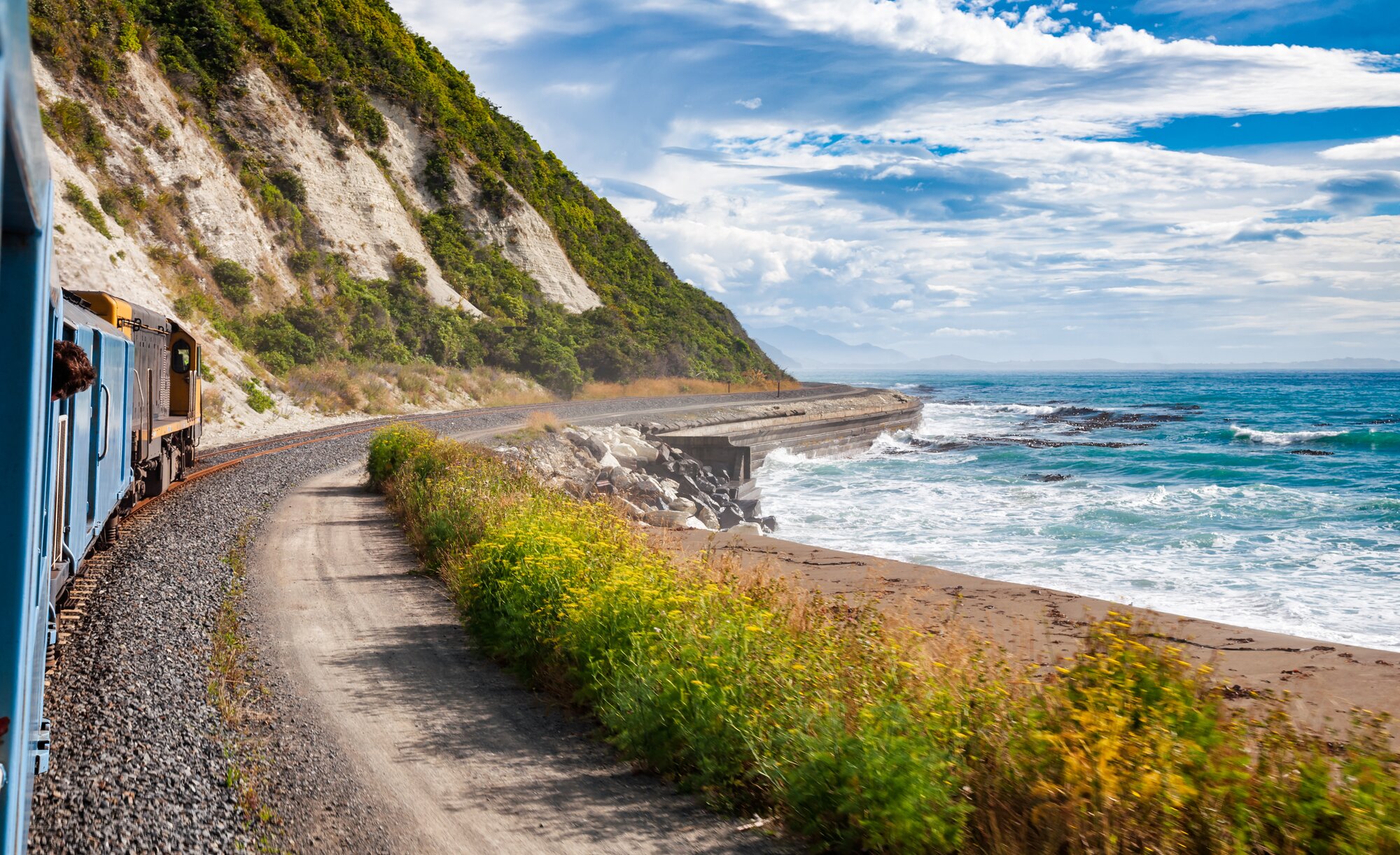
The TranzAlpine begins across the flat Canterbury Plains on New Zealand’s South Island, where farmland stretches outward in orderly patterns. This quickly changes as the Southern Alps come into view.
Climbing into Arthur’s Pass, the landscape becomes steeper and more varied, with braided rivers and dense vegetation. The terrain feels more vertical and less predictable than the plains.
Crossing to the West Coast, the environment shifts again. Rainforest replaces dry conditions, and the colours deepen as the train approaches Greymouth.
Before (Christchurch):
- See how the city of Christchurch is rebuilding and redefining itself
- Connect with local stories of resilience and farm life outside of the urban centre
After (West Coast / Greymouth):
- Explore rugged coastlines and rainforest ecosystems
- Learn about the region’s mining history and evolving identity
Shinkansen — Japan
Tokyo → Kyoto | ~ 2.5 hours
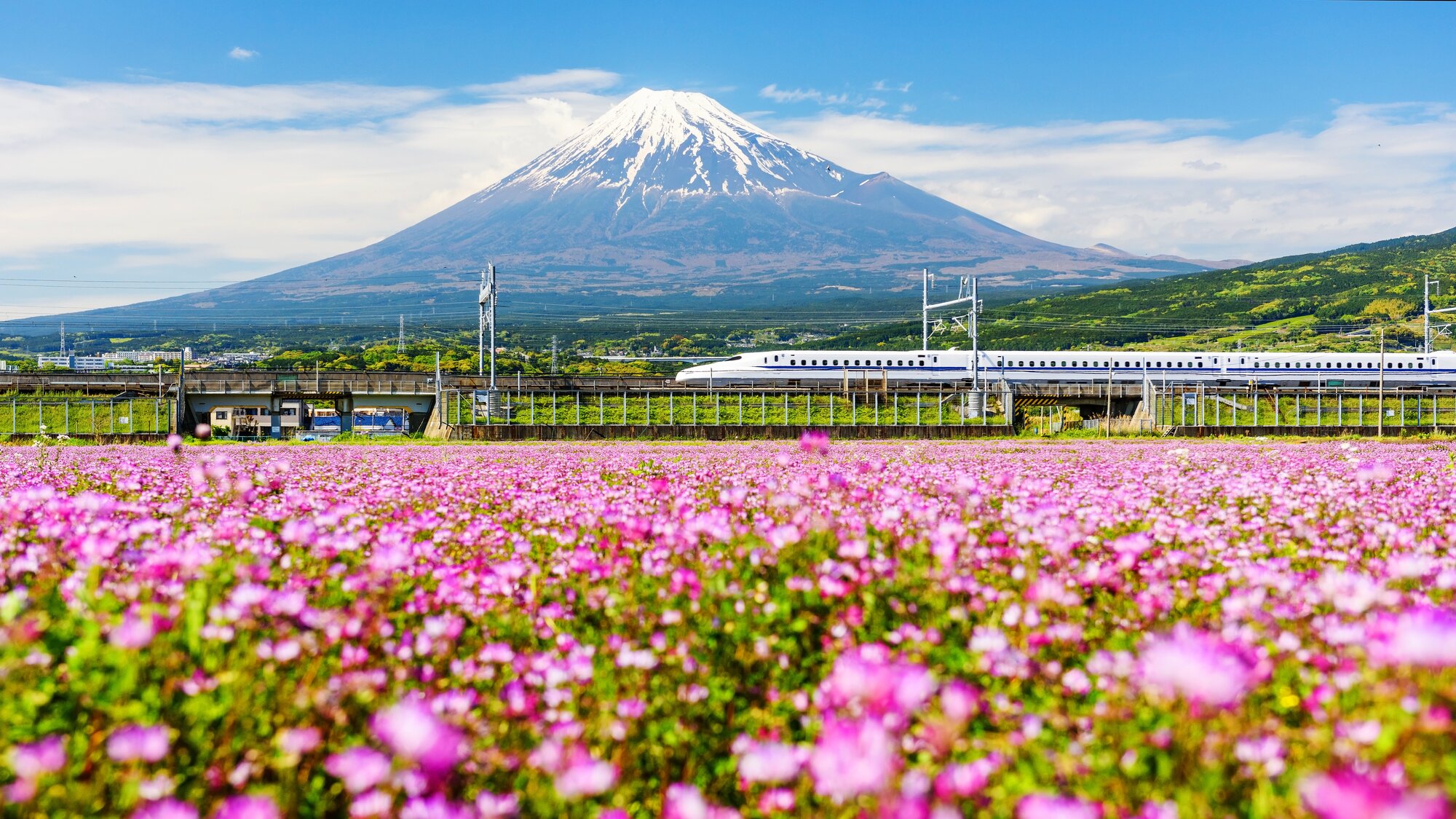
The Shinkansen connects Tokyo and Kyoto with speed and precision, but the journey also reveals subtle shifts in the landscape. Leaving Tokyo, dense urban neighbourhoods extend outward before gradually giving way to smaller towns and agricultural areas.
On clear days, Mount Fuji appears along the route, offering a clear visual marker between regions. The transition into Kyoto is noticeable through changes in scale and architecture, with a slower pace compared to the capital.
The short and speedy nature of the journey highlights how Japan’s hallmark efficient infrastructure connects regions while preserving distinct identities across Japan.
Before (Tokyo):
- Navigate neighbourhoods that reveal the city’s contrasts—historic temples and contemporary culture
- Experience daily life through food, markets, and local routines
After (Kyoto):
- Step into Japan’s cultural heart with context—temples, tea culture, and seasonal traditions
- Explore quieter districts where everyday life continues alongside heritage
Bringing It All Together
Rail journeys offer the chance to observe how landscapes change gradually over distance, while a local guide helps you understand it, creating a journey that stays with you long after it ends.