Choose a currency
Prague Castle private tours
0 results
You've managed to find one of the few places we don't have guides yet.
Make it yours

Customize your tour
Get in touch with the guide to create an itinerary that's the perfect fit and uniquely yours
Prague Castle tours
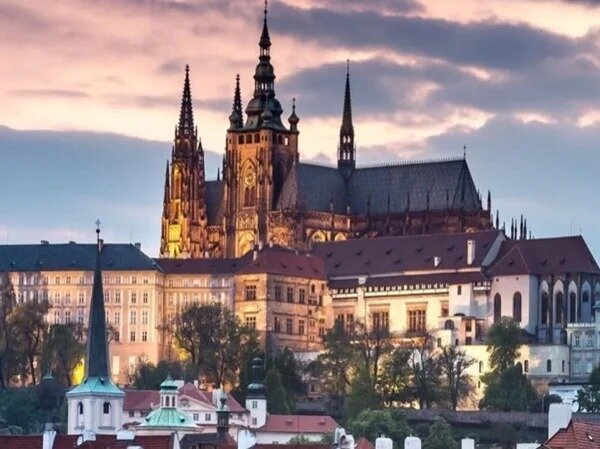
See the best of Prague Castle with a private guide
A fortified stronghold that Prince Bořivoj raised on this ridge above the Vltava around 880 is, more than a thousand years later, still the working seat of the Czech presidency. In between, the site passed from Bohemian princes and kings to Holy Roman emperors to Czechoslovak presidents. Nothing was cleared away to make room for the next tenant. Walk through the courtyards today and you are moving through nearly every major period of Prague's history at once, one layer set against the next.St Vitus Cathedral dominates the skyline, and its construction says as much about Prague's history as its architecture does. Charles IV began the great Gothic building in the fourteenth century, at the moment Prague became an imperial capital, yet the cathedral was not finished for almost six centuries. Inside, the Chapel of St Wenceslas and the royal tombs connect the building directly to the ruler it commemorates, while the chamber associated with the Bohemian Crown Jewels ties the cathedral to the practical business of Bohemian kingship as much as to its religious role. A short walk away, the Romanesque St George's Basilica belongs to an older phase of the castle, built well before Charles IV's cathedral. Set the two buildings side by side and you can read the site's history simply by comparing their stone. The Old Royal Palace tells a similar story from a secular angle: its rooms show how successive rulers reworked the same spaces for ceremony, administration and daily residence rather than starting over each time.Vladislav Hall shows that blending of periods on a single ceiling. Benedikt Ried designed it around the turn of the sixteenth century, pairing sweeping late-Gothic vaults with early Renaissance window frames. The hall marks the exact moment one architectural style gave way to another. The castle kept changing after Ried's time. Under the Habsburgs, and especially Rudolf II, Prague became an imperial centre of art and science, and the buildings around the courtyards still carry that ambition even where the details are easy to miss. Then, after Czechoslovakia was founded in 1918, architect Jože Plečnik reshaped the courtyards and gardens for a modern democratic presidency, working carefully enough that the older fabric of the castle was not erased in the process.Visiting the complex on your own can feel like joining a long conversation partway through, since the cathedral, palaces, churches and courtyards each speak to a different century and a different ruler. A private guide on ToursByLocals can turn that conversation into a coherent story of dynasties, faith and national identity, choosing which buildings to dwell on based on what interests you and clarifying how the Romanesque, Gothic, Renaissance, Baroque and twentieth-century work fits together on one hill. A guide can also judge the pace against the castle's slopes, courtyards and cobbled surfaces, which matters here more than it might elsewhere. From there, it is easy to extend the day toward Hradčany Square, Strahov Monastery, the Lesser Town and Charles Bridge, or simply to shape the visit around your own interests, timing and mobility.
Best of Prague Private Tour Including Tickets to the Prague CastleGrand city tour of PragueFascinating Prague Jewish Quarter Half-Day Private Walking TourHalf Day Walking Tour Around PraguePrague Half Day Walking TourA sightseeing of Prague - Full Day Walking TourPrague Jewish Quarter Private Tour with HistorianLuxury Prague with a Private VanHalf Day walking tour around PraguePrague 4 hours Walking TourExplore Prague Highlights! Half Day Comfortable Driving & a Little bit of Walking Private Tour with a Local GuideHalf Day tour to Terezin GhettoKutna Hora Day Tour with a visit to bone OssuaryPrivate Day trip to Bone Church in Kutna Hora from Prague All-InclusivePrague Highlights: Private Half-Day Driving TourSights and Sounds of Prague Half Day TourDay Trip to Terezin Concentration Camp from PragueGetting to know Prague by limousine or lux minivanHighlights of Prague With a Boat Trip and Tickets IncludedČeský Krumlov Full Day Tour by van or carUnique Walking Tour Orientation of Prague Old & New TownHolocaust in the Eastern Europe: Czechoslovakia Half Day TourPrague Fascinating Highlights: A Walking TourDay trip from Prague to Cesky Krumlov - a charming UNESCO listed medieval townTerezín: A half-day educational private tour of Terezín concentration campPrague Castle tour with Visit to InteriorsALL IN ONE! Prague Highlights and Jewish Quarter private full-day driving and walking tourPrague Grand Experience in a Half Day TourFull-Day Prague Highlights with Prague Castle InteriorsThe Best of Prague Full Day TourPrague Full Day Walking TourCesky Krumlov Tour — Explore the Picturesque Town, Castle & Historic StreetsPrivate Half Day Prague Walking Tour with Prague castle ticketsCesky Krumlov daytripFull-Day Prague Overview Tour of the Golden CityCesky Krumlov & Hluboka: pearls of the South Bohemia Extended Full Day with mediaeval lunch menuHalf Day Prague Jewish Quarter TourBohemian and Saxon Switzerland from Prague - Private Full-Day TourBest of Prague Half Day Tour in a comfortable vanPrague Castle, UNESCO world heritage site